The Cognitive Friction of Inverse Kinematics and False Positive Occlusion in I Am Security VR
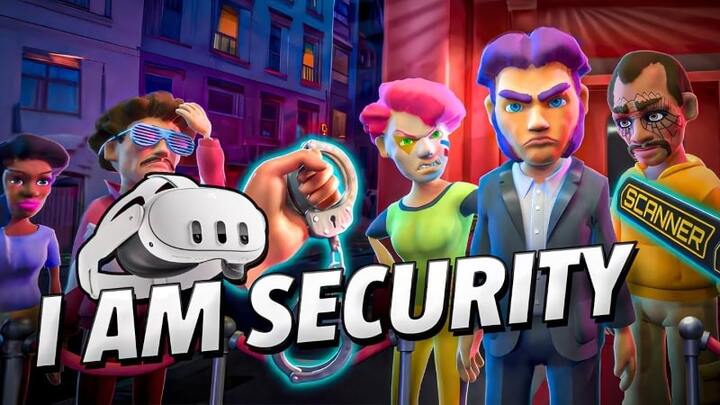
Virtual reality simulation games thrive on the delicate balance between spatial immersion and intuitive mechanical response. I Am Security enters this space as a high-stress security management simulator, requiring players to scan, physical-search, and make split-second threat assessments on incoming venue patrons. However, beneath its immersive physics framework lies a severe mechanical breakdown that severely compromises high-level competitive gameplay: the compound failure of physics-based Inverse Kinematics (IK) combined with false-positive physical occlusion detection.
This issue does not present as a simple graphical glitch or a minor menu bug. Instead, it creates a systemic, unfair failure loop during high-density gameplay waves. When players attempt to perform required contraband searches on crowded patrons, the interaction between hand-tracking collision hitboxes and procedural NPC skeletal rigs produces ghost collisions. This deep structural dive examines how this mechanical friction degrades player agency, breaks scoring feedback loops, and highlights the technical limits of physics-based interaction in VR security simulators.
1. The Mechanical Foundation of VR Physical Inspection Systems
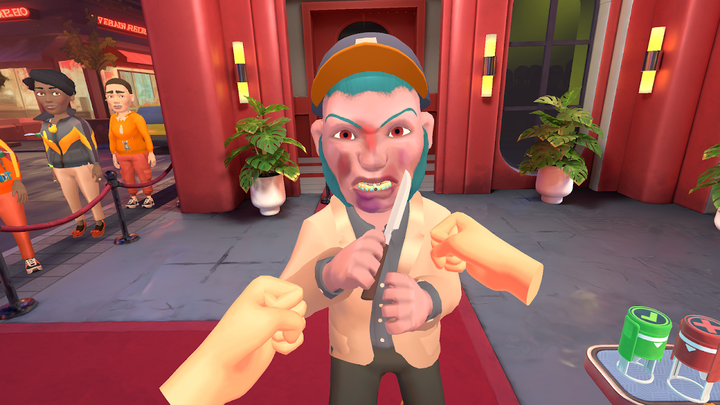
In standard flat-screen security management games, checking a patron for contraband is reduced to a simple point-and-click UI interaction or an automated scanning bar. I Am Security attempts to revolutionize this mechanic by forcing the player to physically move their VR controllers to pat down patrons, operate handheld metal detectors, and peer into personal bags using dynamic spatial physics.
To achieve this level of physical realism, the game engine tracks the position of the player's controllers and translates them into virtual hands using a physics-driven Inverse Kinematics solver. The system calculates vector collisions between the player's hands, their tools, and the complex, soft-body physics hitboxes attached to each procedural NPC model. In low-density tutorial levels, this pipeline functions smoothly, giving players the impression of complete physical control over their security environment.
2. Procedural Patrons and the Inception of Spatial Hitbox Overlap
As players progress beyond the entry-level shifts, the game scales difficulty by ramping up queue density and introducing complex patron clothing profiles. Heavy coats, layered accessories, and large backpacks are added to NPC models to obscure contraband items like weapons, unauthorized liquids, and illegal electronics.
This visual complexity creates severe structural issues within the spatial collision engine. The hitboxes for clothing items do not shrink or dynamically adjust when compressed by player interaction. Instead, they remain static geometric shells placed over the NPC core skeletal mesh. When a player attempts to pat down a patron wearing a bulky winter jacket, the player's virtual hand clips through the outer clothing shell and registers an accidental, phantom collision with the hidden body mesh beneath, triggering false positive search feedback.
3. The Mechanics of Inverse Kinematics Feedback Loops
The game IK engine is programmed to prevent the player's virtual hands from passing through solid patron geometry. When a collision is registered, the solver attempts to recalculate the position of the virtual arm, bending the wrist and elbow joints to keep the hand resting realistically on the surface of the NPC.
3.1 The Geometry Compression Glitch
When a player performs a rapid scanning motion, the IK solver receives dozens of opposing collision vectors every millisecond. Unable to resolve these conflicting positional requests, the virtual arm begins to jitter violent across the screen, a phenomenon known as joint snapping.
- Primary Collision Vector: Player hand moving forward into the patron coat.
- Secondary Collision Vector: IK solver forcing the wrist back to prevent mesh clipping.
- Tertiary Collision Vector: The physical metal detector tool colliding with the NPC torso.
- Quaternary Collision Vector: Environmental queue barriers pinning the patron from behind.
Because these vectors conflict, the IK engine defaults to a reset frame, causing the player's virtual hand to instantly snap back to their physical controller origin point, completely disrupting the flow of the physical search.
4. False Positive Contraband Triggers and Occlusion Errors
The most damaging consequence of this IK jitter is its interaction with the game threat-detection logic. The game evaluates whether a search was justified based on physical tool contact with actual contraband meshes. However, when the player's hand or scanner jitters due to an IK snapping loop, the collision point briefly penetrates the patron mesh at hyper-velocity.
4.1 The Physics Engine Sampling Rate Issue
Because the VR physics engine runs at a fixed update rate, high-velocity hand snapping causes the collision detection script to skip spatial steps. The game engine registers the scanner as having passed directly through a patron body without touching the outer skin, triggering a false-positive contraband alarm for an item that does not exist.
The scanner registers a physics frame inside the patron's internal torso mesh, where default placeholder assets reside. The game logic misinterprets this internal mesh contact as a hidden weapon, forcing the player to detain an innocent patron. When the player processes the detainment, the post-shift summary penalizes their score for arresting an unoffending civilian, directly punishing them for an engine calculation error.
5. Queue Density Bottlenecks and Queue Stacking Pressure
During late-game shifts, the player is subjected to strict time limits per patron, combined with aggressive queue overflow penalties. When multiple patrons gather at the security gate, their individual collision meshes begin to intersect with one another and with the security booth physical barriers.
This overcrowding creates an absolute nightmare for spatial tracking. If a patron behind the active subject steps too close, their backpack mesh merges with the active patron's rear hitbox. When the player reaches around the active patron to check their waistband, the game registers contact with the second patron in line. The player receives a penalty for assaulting an unvetted civilian in the queue, despite visually making contact only with the primary target in front of them.
6. Hardware Polling Frequency and Controller Latency Mismatches
The severity of the IK tracking failure varies dramatically depending on the VR hardware being used. Modern headsets operate at different controller polling rates, ranging from 60 Hz on standalone mobile units to 144 Hz on high-end PC VR setups.
High-frequency tracking systems actually exacerbate the false-positive occlusion bug. Because the high-end headset reports controller position changes much more frequently, the game IK solver receives a much higher volume of conflicting spatial data per second during a mesh collision. This drives the IK solver into hyper-oscillation, increasing the probability of a physics frame skipping through an NPC body mesh and triggering an incorrect arrest penalty.
7. Strategic Breakdown in High-Level Competitive Play
In high-stakes leaderboard play, where perfection is required to reach top rankings, this mechanical friction completely destroys the game risk-reward structure. Players are forced to abandon realistic physical security techniques in favor of absurd, unnatural exploits designed specifically to avoid triggering the IK solver.
Rather than conducting thorough physical pat-downs or using the handheld metal detector as intended, top-tier players rely on standing at maximum arm length and using slow, single-finger tapping motions on specific pixel points of patron models. This artificial playstyle bypasses the immersion the game was built to deliver, turning an interactive VR simulation into a tedious exercise in hit-box evasion.
8. The Failed Patch Iterations and Physics Engine Limits
The development team has attempted to address spatial clipping issues through multiple post-launch balance updates. However, these updates have mostly focused on altering score multipliers and tweaking patron arrival timers rather than refactoring the underlying physics engine.
When developers attempt to solve spatial clipping by softening collision boundaries, patrons become ethereal, allowing tools to pass through valid contraband items without registering a hit. Conversely, when developers harden collision boundaries to ensure no contraband is missed, the IK jitter and hand-snapping issues worsen significantly. The game remains trapped between these two mechanical extremes because the core Unity physics layer was not designed to handle complex, real-time dual-mesh IK constraints under high-frequency VR inputs.
9. Proposed Algorithmic Solutions for Spatial Stability
To restore competitive integrity and immersive realism to I Am Security, the developers must implement a decoupled interaction pipeline that separates visual IK rendering from actual gameplay threat detection.
Step-by-Step Technical Overhaul Plan:
- Decouple virtual hand visuals from the physical collision checks using a smoothed ghost-hand buffer system.
- Replace static, rigid clothing hitboxes with dynamic soft-body volumetric meshes that compress predictably under player contact.
- Implement a mandatory raycast-validation check before any contraband alarm is triggered, confirming visual line-of-sight between the tool and the item.
- Establish a mandatory buffer zone around queued patrons, preventing passive NPC collision meshes from intersecting active inspection areas.
By enforcing these technical adjustments, the engine can prevent phantom collisions, ensuring that player skill—rather than physics engine instability—determines shift success.
10. The Broader Impact on VR Security Simulation Design
The ongoing mechanical friction within I Am Security offers a vital case study for the future of interactive VR simulation design. It proves that simply adding realistic physical hitboxes to complex human meshes is not enough to create a satisfying interactive mechanics loop.
Game designers must recognize that physics engines must always serve the clarity of gameplay loop feedback. When realistic physical modeling interferes with basic player agency and causes unfair penalties, the illusion of reality breaks down completely. For I Am Security to reach its full potential as a premier VR simulation title, its spatial mechanics must be rebuilt to prioritize predictable, fair player interaction over uncalibrated physics interactions.
Conclusion
I Am Security represents an ambitious attempt to bring high-stakes physical security operations into the virtual reality realm. However, its reliance on an uncalibrated IK physics pipeline combined with rigid spatial hitboxes creates an unfair, frustrating experience for high-level players. The frequent occurrence of false-positive contraband alarms caused by hand-snapping and mesh clipping ruins the game scoring integrity. Until the developers decouple interaction detection from chaotic IK physics, the title will remain hindered by the very physics systems designed to make it immersive.