


The Digital Absurdist Frontier: A Deep Analysis of the Meme-Convergence Meta in Roblox: Plants Vs Brainrots
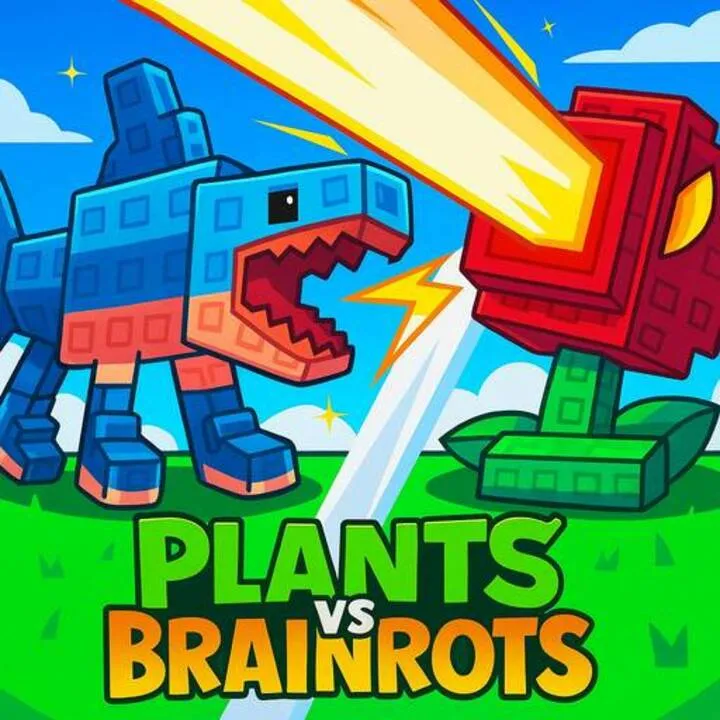
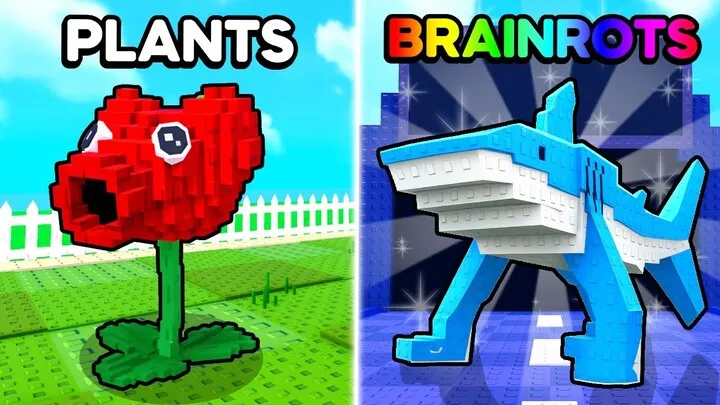
In the chaotic ecosystem of Roblox user-generated content, few titles capture the current zeitgeist of Gen Alpha humor and post-ironic gaming as vividly as [Plants Vs Brainrots]. While on the surface it appears to be a simple "tower defense" parody of the classic PopCap franchise, a deeper investigation reveals a complex semiotic battlefield. The game operates on a mechanic I call "Meme-Convergence," where the tactical value of a unit is inextricably linked to its cultural relevance in the "brainrot" pantheon—Skibidi, Ohio, Sigma, and Grimace. This article explores the mechanical depth of this convergence, analyzing how the game transforms fleeting internet trends into a rigid, mathematical combat system that redefines the tower defense genre for a new generation.
The Dawn of the Brainrot Singularity: Converting Cringe into Combat Logic
The initial phase of [Plants Vs Brainrots] serves as a foundational shift in how players perceive resource management. In traditional games, "Sun" is a neutral energy source. However, in this iteration, the resource is rebranded as "Clout" or "Aura." The game establishes that the "Brainrots"—the encroaching enemies—are not just zombies; they are physical manifestations of decaying internet trends. The player's task is to combat this decay by planting units that represent the "Alpha" side of the meme spectrum.
This mechanical transition is crucial because it forces the player to engage with the aesthetic of the "cringe" as a viable strategic asset. During the early-game "Newgen" waves, the balance of power is determined by the speed at which a player can deploy "Sigma" units. These units don't just deal damage; they exert a "Mewing Aura" that slows down the progression of the Brainrot waves. This establishes a time-based hierarchy where the newest, most relevant memes possess the highest base stats, creating a meta-commentary on the lifecycle of digital content.
The Mid-Game Inflation: The Hyper-Acceleration of Brainrot Variants
As the player moves into the "Second Tier" of levels, the game introduces the concept of "Meme Saturation." This is a hidden difficulty curve where the Brainrots begin to evolve faster than the player’s plants can be upgraded. We see the introduction of "Glitch" and "Ohio" variants of the classic zombie archetypes. These enemies possess high-velocity movement patterns that bypass traditional defensive lines, representing the way viral trends can overwhelm digital spaces.
The response to this is the "Fanum Tax" mechanic—a high-level defensive strategy where specific plants "tax" the health points of passing enemies to heal adjacent units. This creates a spatial puzzle. Players can no longer rely on a simple grid; they must build "vibe-check" chokepoints. The game’s logic dictates that the more absurd a unit’s origin, the more disruptive its impact on the enemy’s pathfinding AI, leading to a gameplay experience that feels like a fever dream governed by strict calculus.
Taxonomy of the Mid-Game Brainrots
- The Gassy One: An area-of-effect enemy that leaves a lingering cloud of "Sticking out your gyatt."
- The Rizzler: A high-health tank that can temporarily "charm" your plants into facing the wrong direction.
- The Cameraman: A scout unit that grants invulnerability to surrounding Brainrots for 3 seconds.
The Skibidi Saturation: Analyzing the Multimodal Siege Engines
By the midpoint of the campaign, the game enters the "Skibidi Arc." This is where the game’s engine truly begins to stress-test the player’s cognitive load. The Skibidi Toilets are not just enemies; they are multimodal siege engines that utilize sound-based attacks. The "Bop Bop Yes Yes" audio cues are not merely cosmetic; they represent a "Psychological Suppression" stat that lowers the fire rate of your "Pea-Sigma" plants.
This layer of depth adds a sensory management requirement to the game. Players must strategically place "Ear-Muff" plants or "Mute-Cores" to negate the suppression. The game essentially weaponizes the "brainrot" audio, making the experience of playing the game part of the challenge. It is a rare instance where the game’s theme (brain-melting content) is reflected perfectly in its mechanical difficulty, as the player must maintain focus amidst a cacophony of overlapping meme sounds.
The Aura Economy: A Deep Dive into High-Level Unit Synergies
Moving into the expert tiers, the game shifts away from individual unit power and toward "Aura Synergies." Every plant has a "Vibe" category (e.g., Chill, Edgy, Rare). Placing two "Chill" units next to each other creates a "Zen-Room" effect that increases Clout production by 15%. However, if an "Edgy" unit is placed near a "Chill" unit, it creates "Cringe Friction," which actually lowers the defense of both units.
This "Aura Economy" mimics the social dynamics of the internet itself. Just as certain memes "cancel" each other out in the real world, the units in [Plants Vs Brainrots] require social harmony to function at peak efficiency. High-level play involves memorizing a complex matrix of social compatibilities. It’s no longer just about fire-power; it’s about social engineering on a 9x5 grid. The player becomes a "Trend Curator," managing the delicate ecosystem of the lawn to prevent a "Total Brainrot Collapse."
Primary Aura Classifications
- Sigma Aura: Increases critical hit chance for all units in the same row.
- Beta Aura: Lowers the cost of neighboring units but decreases their total health.
- Ascended Aura: A rare trait that allows a unit to ignore the "Ohio Effect" environmental hazards.
Environmental Nihilism: The "Backrooms" and "Grimace" Levels

As the timeline of the game reaches its third act, the environments themselves become hostile. The player is transported from the "Suburban Lawn" to the "Backrooms" and eventually the "Grimace Shake Factory." In these levels, the game introduces "Reality Anchors." The "Brainrots" here are no longer funny; they are distorted, glitching entities that can delete tiles from your grid entirely.
The strategy here involves "Glitched Planting," where the player uses "Error-Code" units to reclaim deleted space. This represents the "Internet Nihilism" phase of meme culture—where the humor becomes so deep-fried and distorted that it loses its original meaning. The game forces the player to combat this void by using units that are equally nonsensical, creating a paradoxical battlefield where the only way to survive the "Brainrot" is to embrace an even deeper level of digital insanity.
The Grimace Event: A Case Study in Limited-Time Event Meta
Within the chronological progression of the game, the "Grimace Shake Event" stands as a masterclass in risk-reward balancing. The Grimace units do not attack the plants directly; instead, they "feed" them. A plant that consumes too much "Purple Fluid" becomes "Over-Cashed," gaining 300% attack speed for 10 seconds before being permanently removed from the field.
This forces players to treat their own defenses as "disposable assets." You must cycle through your units, timing their "overdose" to coincide with major boss waves. It’s a frantic, high-intensity mechanic that parodies the "Trend-Hopping" behavior of influencers. The player is encouraged to use up a meme’s popularity as quickly as possible before it "dies" and must be replaced by the next big thing.
The Twitch-Chat Integration: The "Crowd-Sourced" Brainrot
Late in the game’s lifecycle, a mechanic known as "The Streamer’s Influence" was introduced. This system simulates a live audience "backseating" the player. Random prompts appear on the screen—"L," "W," "POG," "Chat is this real?" Depending on the player’s reaction or the sequence in which they click these prompts, the game grants "Global Aura" buffs or debuffs.
This represents the ultimate evolution of the "Brainrot" theme—the loss of individual agency to the collective will of the internet. The player is no longer just a strategist; they are a performer. If "The Chat" (the AI) decides a certain plant is "Mid," that plant’s stats are nerfed in real-time. This mechanic is terrifyingly accurate to the modern digital experience, where the value of an idea is determined by the "vibe check" of an anonymous crowd.
The Post-Modern Boss: Confronting the "Brainrot King"
The final confrontation in [Plants Vs Brainrots] is not against a single entity, but against a shifting amalgamation of every meme the player has encountered. The "Brainrot King" changes its resistances every 30 seconds based on which meme is currently "trending" in a mock-Twitter feed on the side of the UI. If "Skibidi" is trending, the boss becomes immune to toilet-based attacks.
To defeat the King, the player must use "The Touch Grass" ultimate ability. This is the only "Anti-Brainrot" unit in the game. It is extremely expensive and takes a long time to charge. When activated, it clears all memes from the screen and restores the lawn to its original, boring, green state. This is a profound moment of gameplay-story integration; the only way to truly "win" the game is to reject the very memes that the player has spent hours collecting and upgrading.
The Infinite Loop: The "New Game Plus" as Digital Purgatory
After defeating the King, the game does not end. It enters "Infinite Purgatory Mode." The difficulty resets, but the "Brainrot" units are now permuted with each other. You might encounter a "Sigma-Skibidi-Ohio" hybrid in wave one. The Clout costs are tripled, and the "Aura" requirements become impossibly strict.
This reflects the "Eternal Return" of internet culture. Nothing ever truly dies; it just gets remixed, sped up, or slowed down (Reverb + Slowed). The player is trapped in a cycle of defending a lawn that is perpetually under siege by a culture that refuses to move on. The game becomes a test of endurance, asking how long a human mind can remain tactical in the face of absolute, unceasing nonsense.
Survival Statistics in Purgatory Mode
- Average Attention Span: Decreases by 5% every 10 waves.
- Memetic Overload: A hidden stat that causes the screen to shake when too many sounds overlap.
- The "Wait, I Recognize This" Bonus: A small Clout boost for identifying a meme that is over 3 years old.
The Philosophy of the Brainrot: Why We Plant against the Void
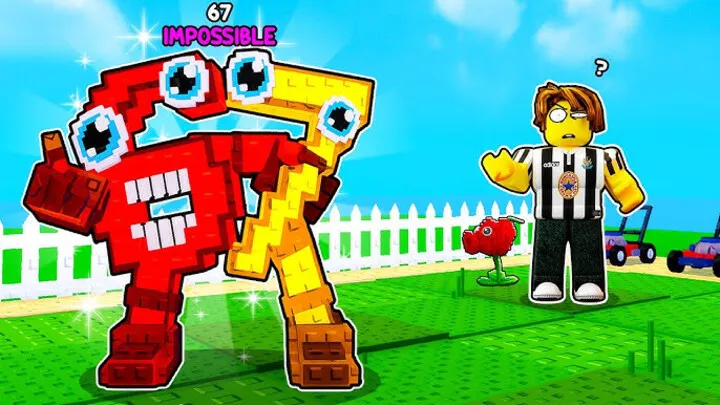
In the final analysis, [Plants Vs Brainrots] is more than a Roblox game; it is a digital archive of a specific era of human absurdity. The gameplay, while functional and deep, serves as a vehicle for a larger observation about how we process information. We take these "Brainrots"—these pieces of digital trash—and we organize them. We give them stats, we give them synergies, and we give them a purpose.
The game suggests that the "Brainrot" is not something to be feared, but something to be managed. By turning the chaotic noise of the internet into a structured tower defense game, the developers have provided a way for the player to exert control over the uncontrollable. We plant our "Sigmas" not because we believe in them, but because they are the only tools we have to keep the "Ohio" at bay for one more night.
Conclusion: The Final Vibe Check of the Digital Era
Roblox: Plants Vs Brainrots is a masterpiece of post-modern game design that hides a rigorous tactical engine beneath a layer of seemingly incoherent internet humor. By analyzing the "Aura Economy," "Meme-Convergence," and "Acoustic Suppression" mechanics, we see a game that is deeply invested in the way modern culture is consumed and weaponized. It challenges the player to find logic in the illogical and to build a defense against a tide of content that is designed to be undefendable. Ultimately, the game is a reflection of our current digital condition: a constant struggle to maintain our "Aura" while the "Brainrot" of the world beats at our door. Whether we win or lose is irrelevant; what matters is how long we can keep the "vibe" alive before the final "Touch Grass" command is given.