Where Winds Meet — A Nuanced Wind-Worn Romance That Rewards Patience

Where Winds Meet is a narrative-driven action-adventure with a strong emphasis on atmosphere, character, and emergent worldbuilding. It pairs contemplative exploration and light, tactical combat with a bittersweet love story, anchored by a central mechanic that uses wind and weather as both narrative device and gameplay pivot. The result is an intimate, slow-burning game that will resonate with players who value mood, layered writing, and deliberate pacing more than spectacle.
First Impressions and Visual Identity
From the first minutes, Where Winds Meet announces itself as a game that privileges tone. The art direction favors muted palettes punctuated by weather-driven color shifts: the same valley that glows warm and golden under a late-afternoon breeze becomes steel-blue and sparse during a cold squall. Character designs are restrained and expressive rather than hyper-detailed, which suits the game’s focus on gestures, small moments, and interpersonal nuance.
Cinematography and environmental composition are especially strong. Camera framing and transitions—slow pushes into wide vistas, lingering close-ups during intimate conversations—create a cinematic rhythm that complements the script. Technical polish is high: lighting, particle effects for wind and leaves, and subtle ambient animations (swaying grasses, drifting dust) consistently support immersion without drawing attention away from story beats.
Narrative and Writing
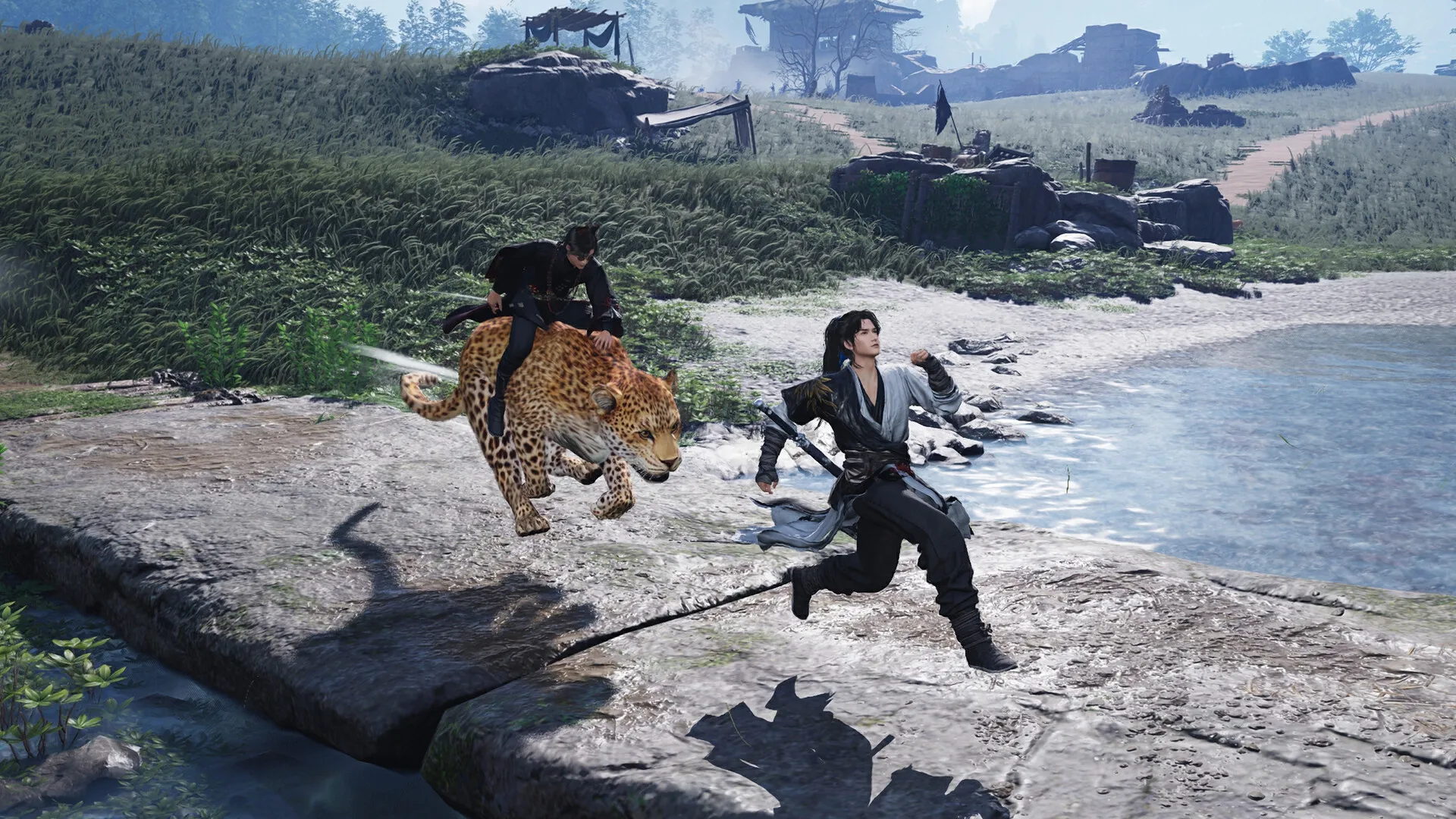
Where Winds Meet tells a love story embedded in a slowly shifting world: two protagonists whose lives intersect through shared duties, opposing loyalties, or complementary gifts tied to the wind. Rather than rely on melodrama, the writing favors constraints—unspoken histories, missed opportunities, and quiet acts of care—creating emotional weight through implication and specificity.
The script balances lyrical passages with grounded dialogue. Expository moments are usually environmental or vignette-driven rather than delivered via lengthy monologues. Side characters are well-realized and often serve as thematic mirrors; NPCs’ small arcs reinforce the central motif of change and how people respond to forces they cannot fully control. The ending resists tidy closure, offering a bittersweet coda that rewards players who stayed for the subtleties.
Mechanics and Systems
Gameplay centers on three entwined pillars: wind manipulation, exploration, and tactical encounters.
- Wind manipulation: The wind is a toolkit and a character. Players learn abilities that nudge weather patterns, create gust-bridges, or redirect drifting elements. These mechanics are used for traversal puzzles, opening otherwise inaccessible paths, and subtly affecting NPC behavior. The implementation is elegant: simple inputs yield expressive results, and the game avoids turning the system into a rote checklist.
- Exploration: The world is compact but dense, designed for repeated returns. Landmarks reveal layered histories; small chores and optional vignettes reveal more about the protagonists’ inner lives. The map respects player curiosity — reward loops favor careful observation over combat grinding. Environmental storytelling is a strength: you’ll assemble character backstories from ruins, notes, and reused props rather than being told everything outright.
- Tactical encounters: Combat is deliberately light and tactical, emphasizing positioning and wind effects over twitch reflexes. Battles rarely bloat the runtime and instead serve as tension-release points that underscore narrative stakes. Enemy design is varied and often thematically linked to weather motifs—creatures that dissipate in sun, foes that coalesce in storms—reinforcing the core systems.
Pacing and Structure
Where Winds Meet trades rapid escalation for episodic, poetic progression. Chapters are built around distinct weather cycles that change available activities and NPC states. This cyclical structure contributes to a meditative pacing: players are encouraged to linger, experiment with mechanics, and savor scenes. That same pacing can feel glacial for players accustomed to constant stimulus; it’s a deliberate design choice rather than a flaw, but it will polarize audience expectations.
Audio and Score
The sound design is exemplary. An understated score—mostly piano, soft strings, and wind instruments—underscores emotional beats without swamping them. Environmental audio is meticulously layered: distant gulls, the sigh of grass, the metallic ring of a wind bell—these details deepen presence. Voice performances (where present) lean restrained and naturalistic, suiting the game’s minimalist direction.
Accessibility and Quality-of-Life
Where Winds Meet ships with a thoughtful set of accessibility options: adjustable text sizes, subtitle timing, input-assist toggles for wind mechanics, and difficulty options for tactical encounters. The UI is clean and unobtrusive, with clear signposting for those who prefer a guided experience. Save systems and chapter-select features make it easy to replay particular scenes or choices without re-running large sections.
Areas for Improvement
- Slow pacing: The game’s meditative tempo is a feature but will test players expecting constant momentum. Considered trimming or optional side-activities could help players who enjoy the world but want a tighter playtime.
- Occasional mechanical opacity: A few late-game wind puzzles hinge on interactions that aren’t introduced clearly earlier, producing trial-and-error moments that can momentarily break immersion. A context-sensitive hint toggle would be useful.
- Narrative restraint risks under-exposition: The ending’s ambiguity is thematically coherent but may leave some players craving firmer resolution. Optional epilogues or supplementary codex entries could satisfy those who prefer more closure without compromising authorial intent.
Why It Matters
Where Winds Meet is an example of modern narrative design that trusts players to read between lines. It demonstrates how a single unifying mechanic—the wind—can inform everything from traversal to combat to emotional tone. The game’s success is not in reinventing large genres but in coherently marrying mechanic and metaphor: gameplay reinforces theme in meaningful ways.
Who Should Play It
- Fans of contemplative narrative games (e.g., Journey, GRIS, Night in the Woods) who appreciate atmosphere over action.
- Players who enjoy mechanics that emerge organically from world logic rather than arbitrary upgrades.
- Those interested in emotionally restrained stories and games that reward patience.
Final Verdict
Where Winds Meet is a quiet triumph: a beautifully realized, thematically tight experience that blends exploration, light tactics, and intimate storytelling around a single evocative motif. It won’t satisfy every palate—its slow cadence and understated narrative will be divisive—but for players willing to lean into its rhythm, it offers a richly textured emotional journey that lingers like a breeze long after the credits roll.